Rovisco Pais (Portugal)
The National Leprosarium of Portugal, the Hospital-Colónia Rovisco Pais (the Rovisco Pais Hospital-Colony) was established in 1947. It was supported by the Estado Novo (or New State, as the Salazar government in Portugal was known). Alice Cruz argues that it can be understood as a hygiene project “for the regulation and regeneration of the Portuguese population”:
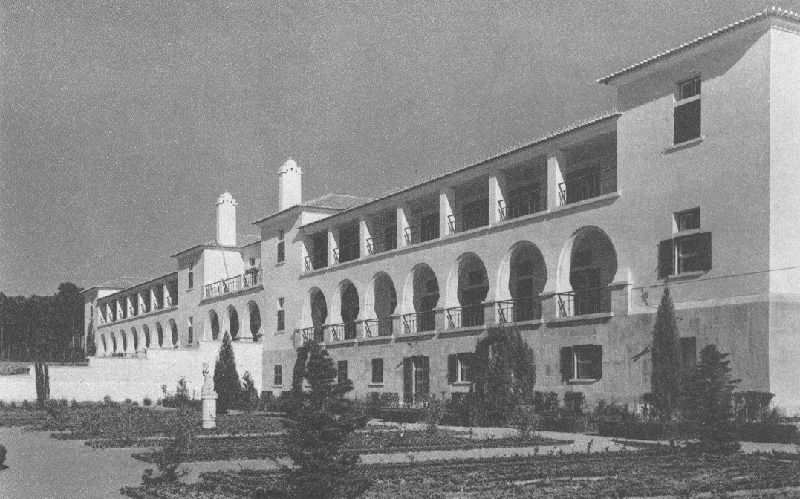
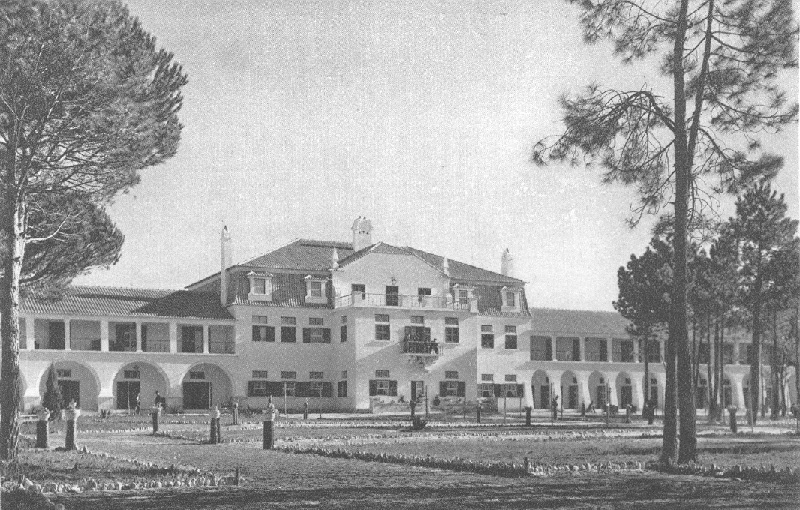
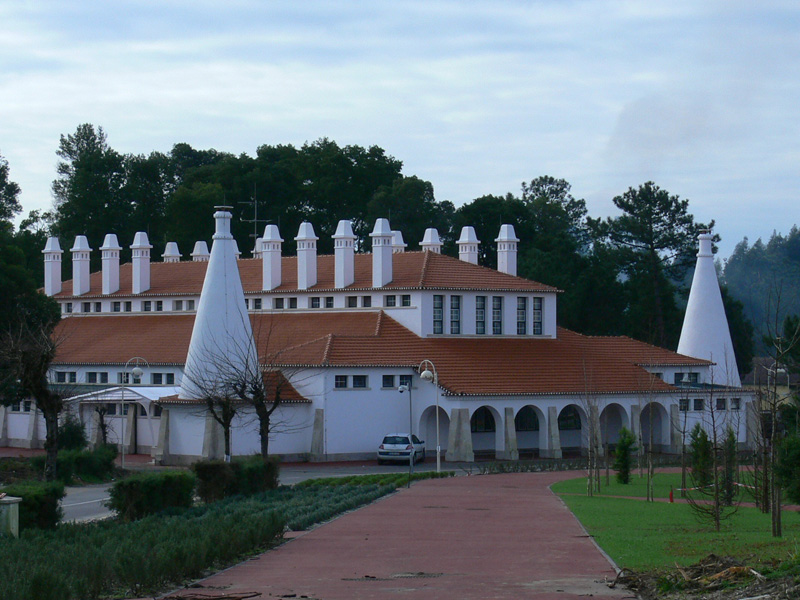
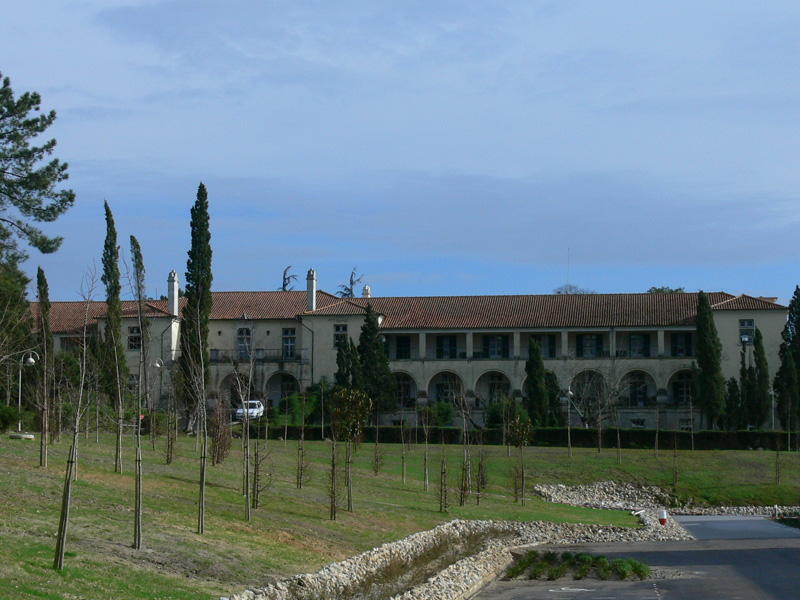
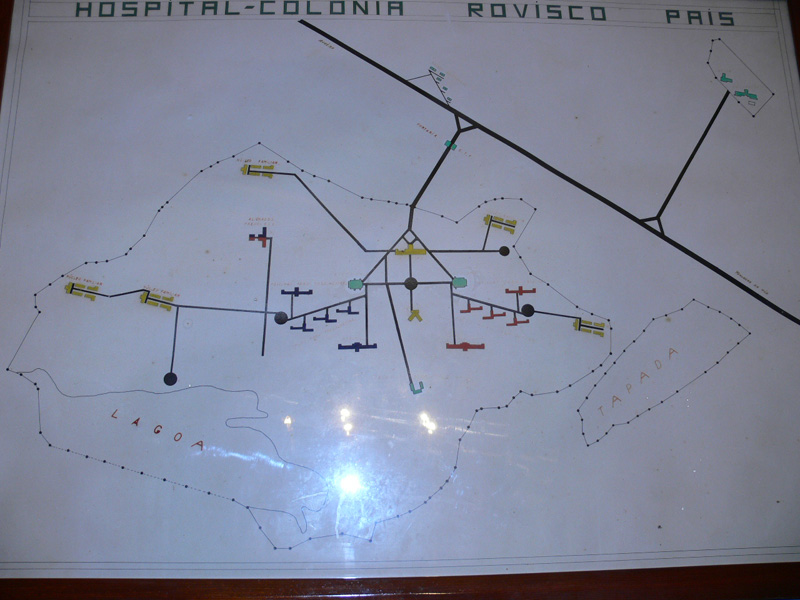
“The Hospital Colony was built in the coastal village of Tocha in the district of Cantanhede on rural property of some 140 hectares, with a capacity for a thousand leprosy victims. The architectural project was entrusted to Carlos Ramos (1897-1969), one of the most renowned Portuguese hospital architects at the time (Coutinho, 2001).”
Its construction was made possible by funds from an inheritance left by José de Rovisco Pais to the civilian hospitals of Lisbon.
“Bissaya Barreto (1938b, p.3) initiated his campaign, entitled Pelos Leprosos, Contra a Lepra (For the Lepers, Against Leprosy), in the pages of a publication devoted to sanitary education, A Saúde, which called attention to the need for an articulated and concerted plan in the struggle against this disease. This lacuna had been pointed out since the middle of the 19th century, a period coinciding with the apparent resurgence of the disease in Portugal (Carvalho, 1932; Silva, 1962).”
“In the 1930s, the Ministry of the Interior appointed a commission to study leprosy, which reported the existence of 1,127 cases in the country (Silva, 1967). During the same period, the hospitals of the Universidade de Coimbra decreed the end of internment for leprosy patients, leaving only two hospital services in the country for this purpose, the Curry Cabral Hospital in Lisbon and the Joaquim Urbano Hospital in Porto (Silva, 1967). This deficiency was a determining factor for Bissaya Barreto’s political involvement in the fight against leprosy in Portugal, giving the problem greater public visibility.”
“In the 1950s, the prevalence of the disease in Portugal continued to be attributed to imperial expansion: “Portugal, by virtue of its mission to discover new worlds, new continents… had to endure a new invasion of the epidemic, after having abolished it from its nosological map, an invasion occasioned by the coming and going of emigrants and immigrants” (Ribeiro, 1958, p.1).
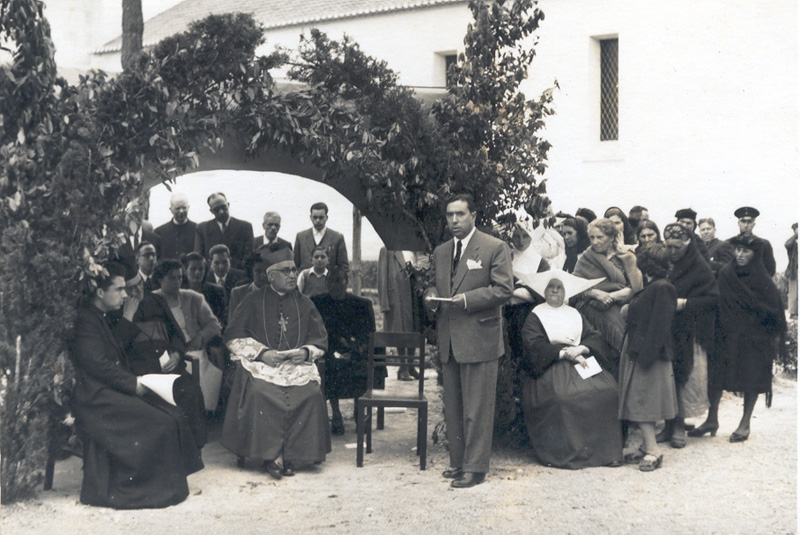
On the occasion of its inauguration, Portugal put aside the humiliation leprosy had provoked and proudly presented itself as a nation that had produced the “best leprosarium on the Peninsula and one of the most notable in Europe … thanks to which the problem of leprosy in Portugal could be resolved within 20 years” (In the inaugural act, 8 September 1947, p.1).
In the 1990s, the Hospital Colony was transformed into the Centro de Medicina de Reabilitação da Região Centro-Rovisco Pais.
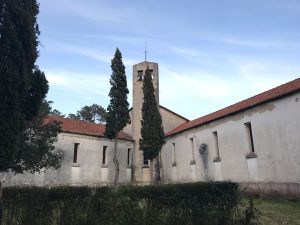
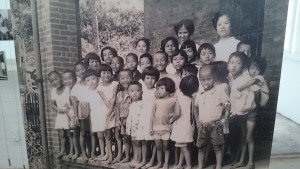
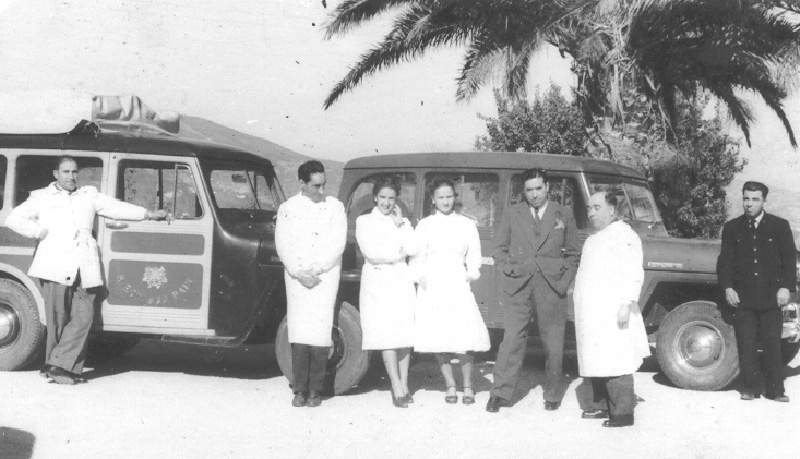
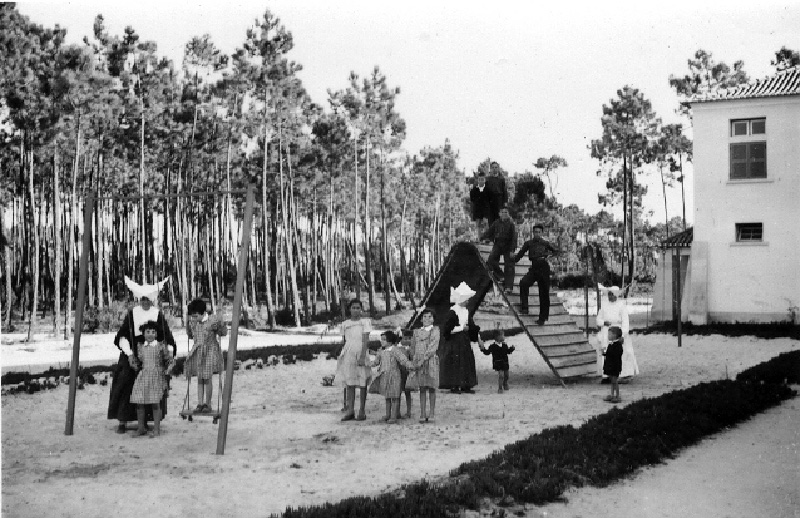
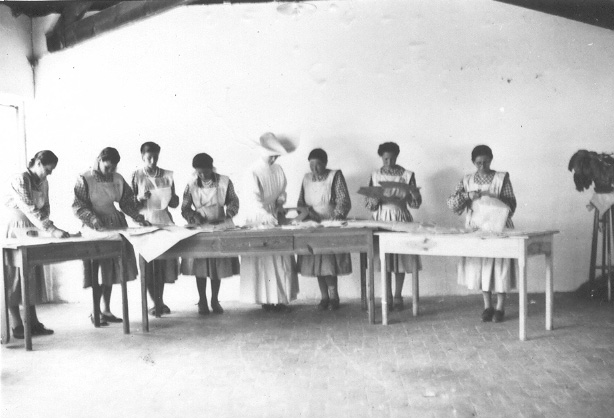
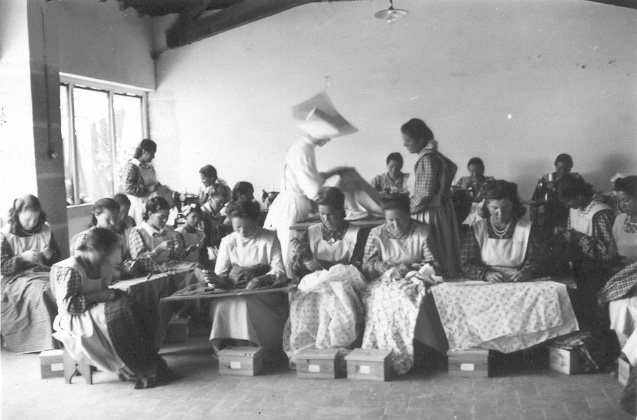
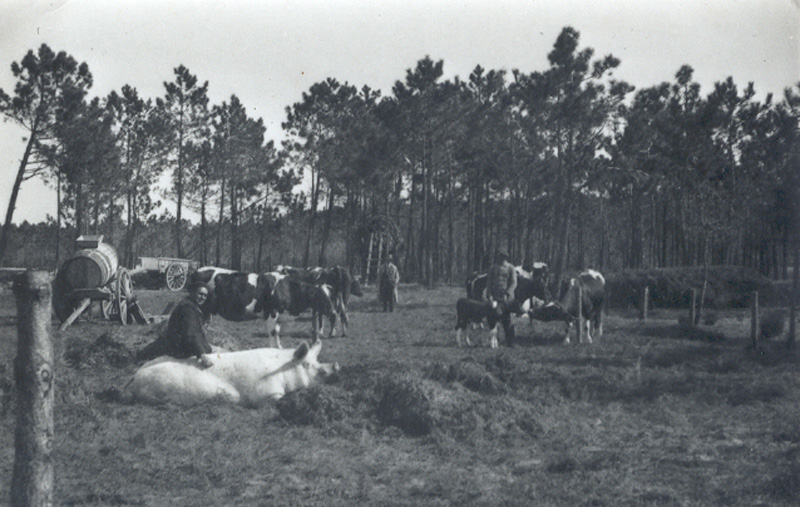
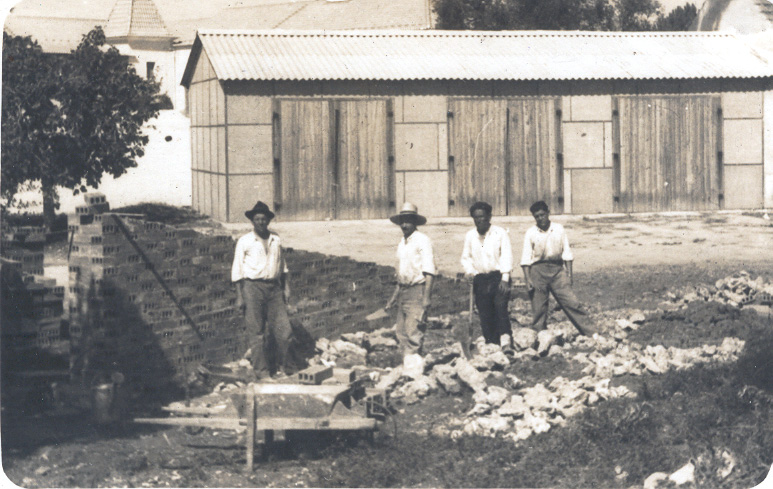
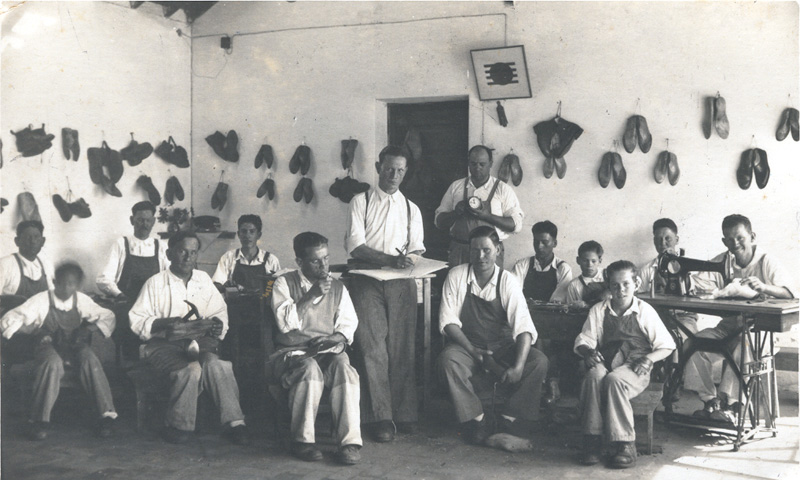
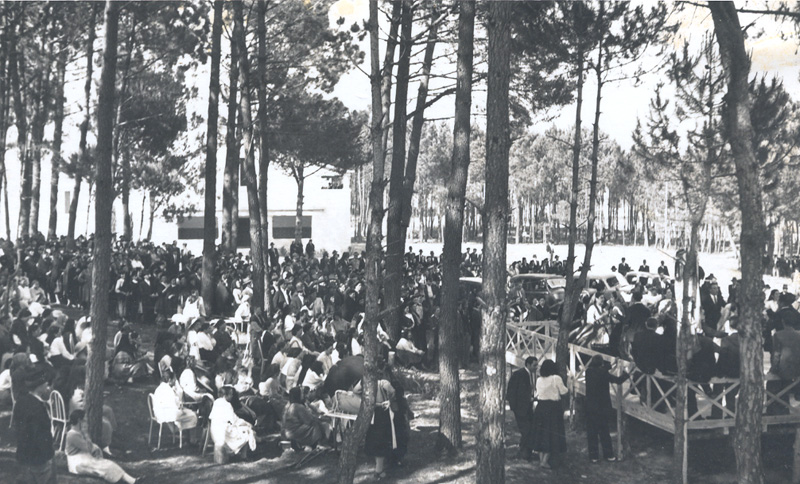
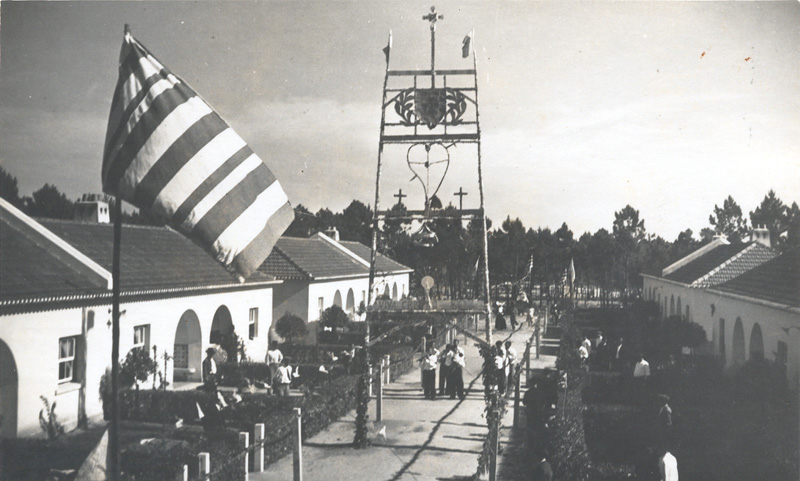
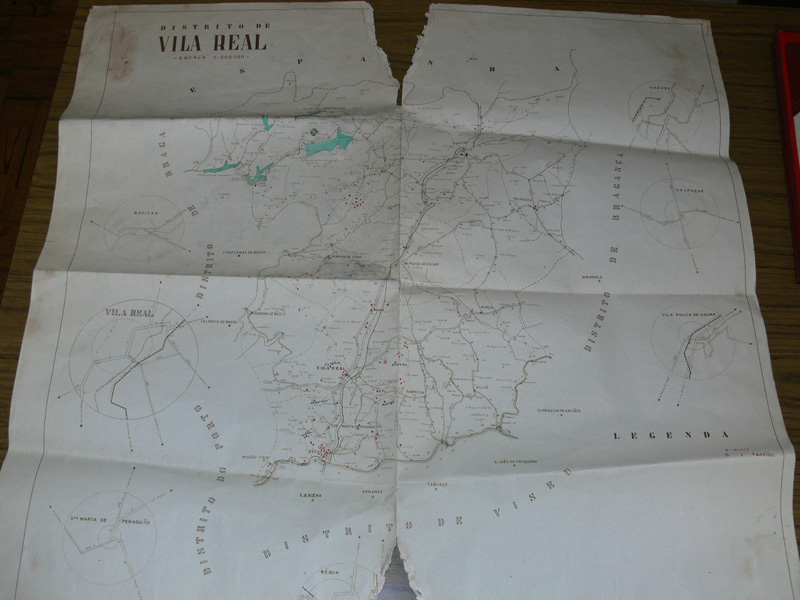
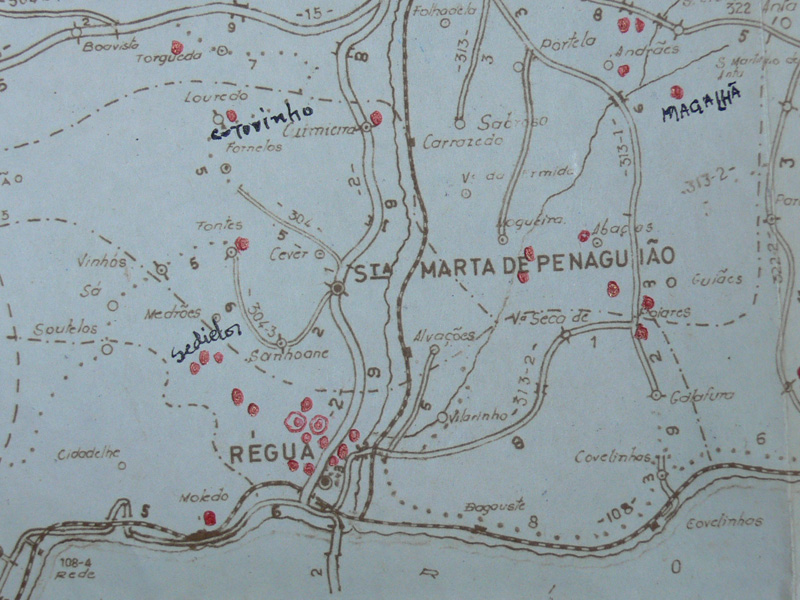
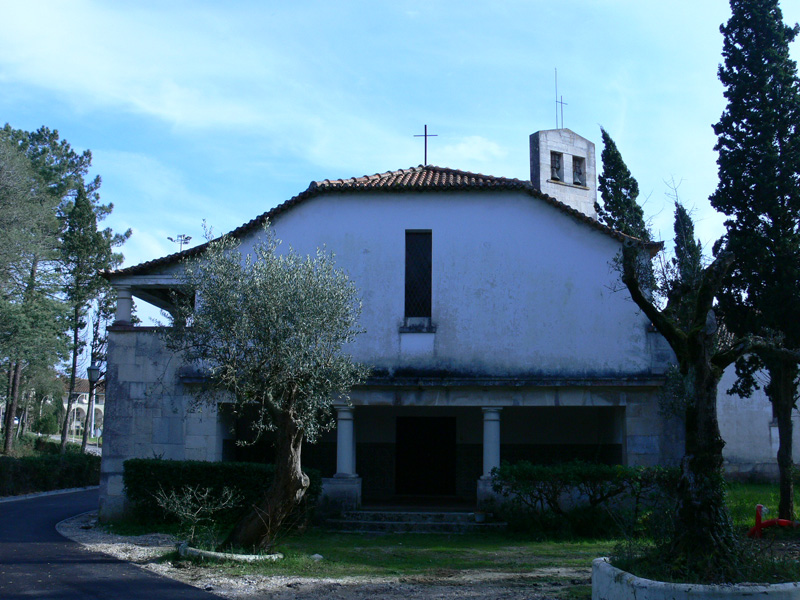
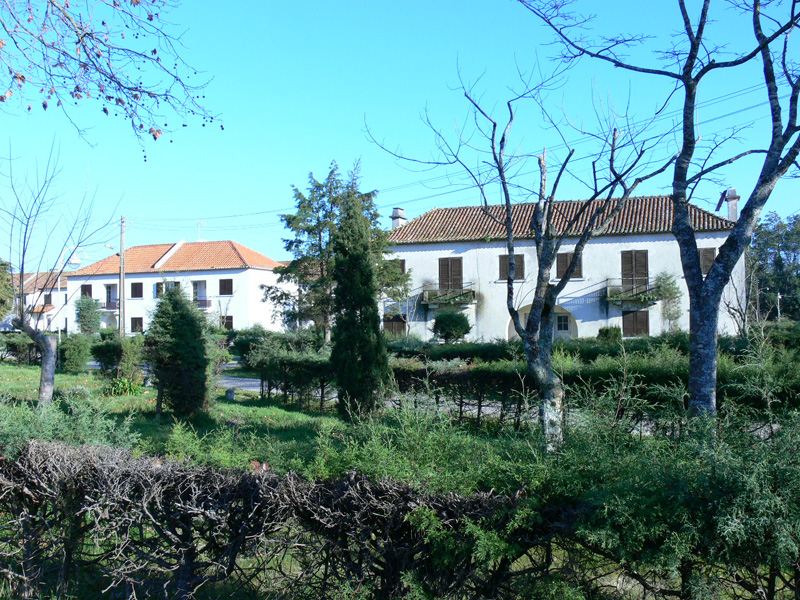
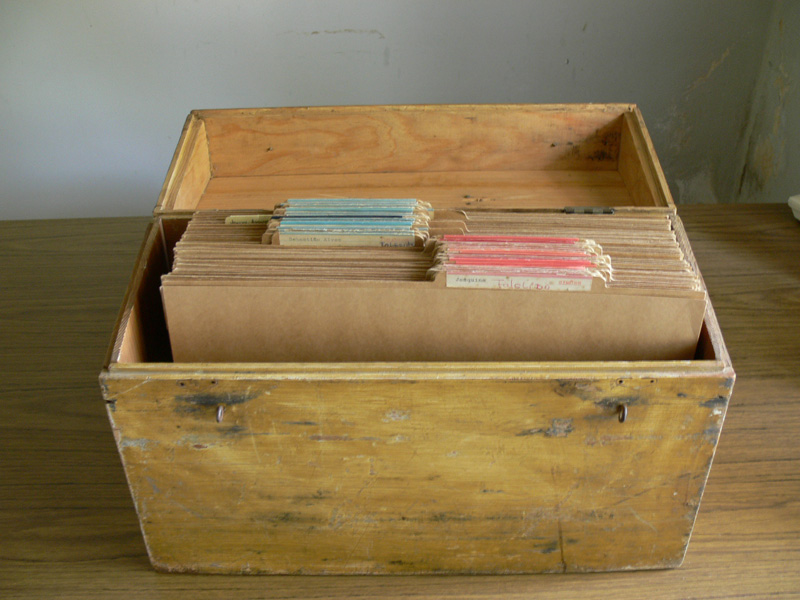
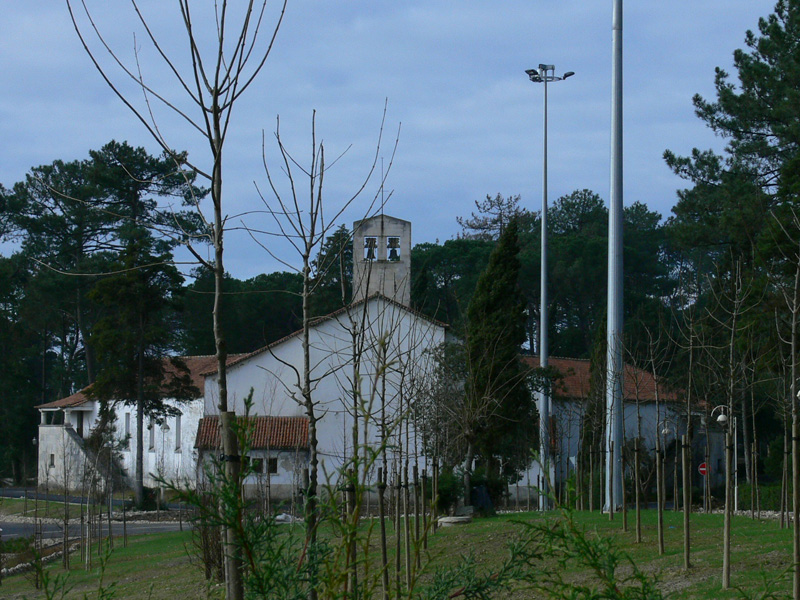
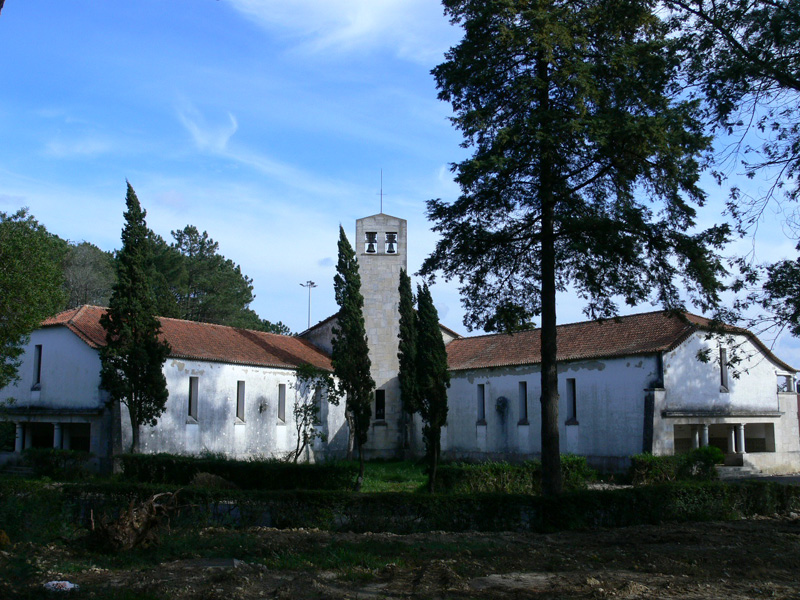
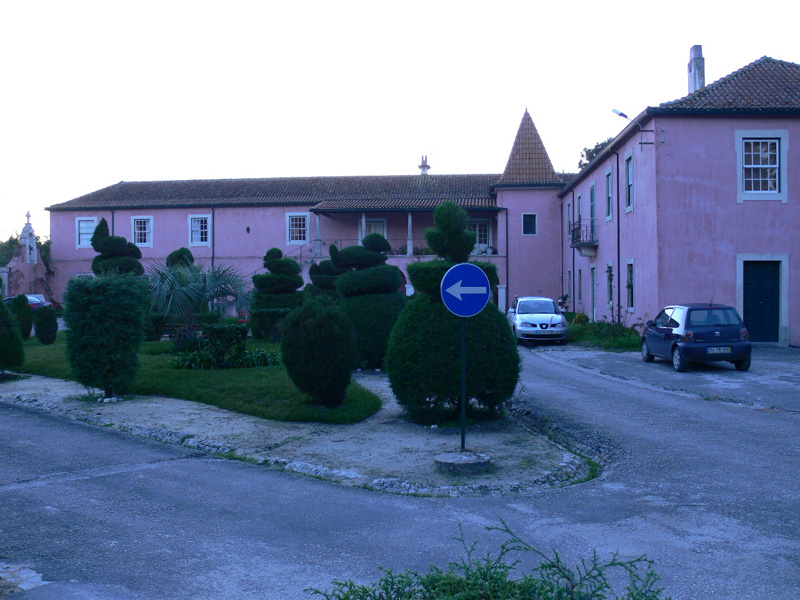
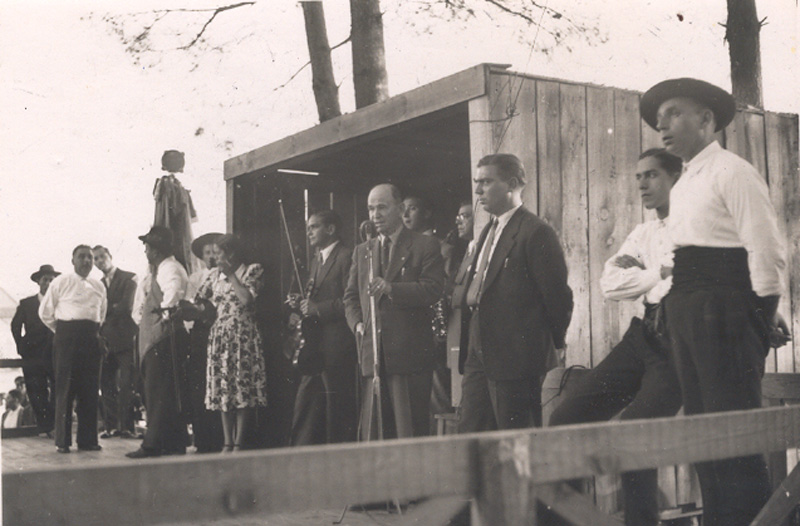
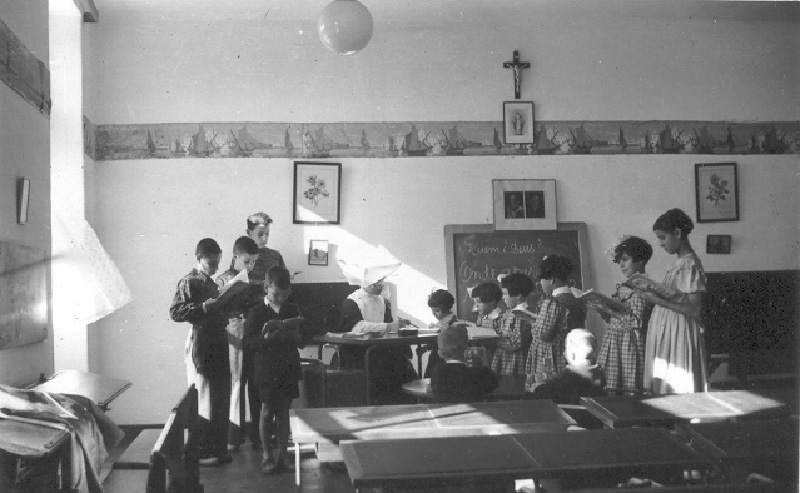
Images from Rovisco Pais show men and women in an agricultural colony. Men were also occupied in building projects. The colony had its own shoemakers.Mobile brigades traveled into rural areas and the photographs show the poverty of the people they attended. One photograph shows a white car with Hospital Rovisco Pais on the front door. There is the map of the Vila Real District where the mobile services carried out their work throughout the villages. Red spots show villages where the services operated and where cases or suspects were located. Other photos show the architecture of the colony, the church, streets lined with houses, kitchen and laundry, hospital pavilions, and special events – probably feast days. There are also photos of children in the créche, the classroom, and the playground.
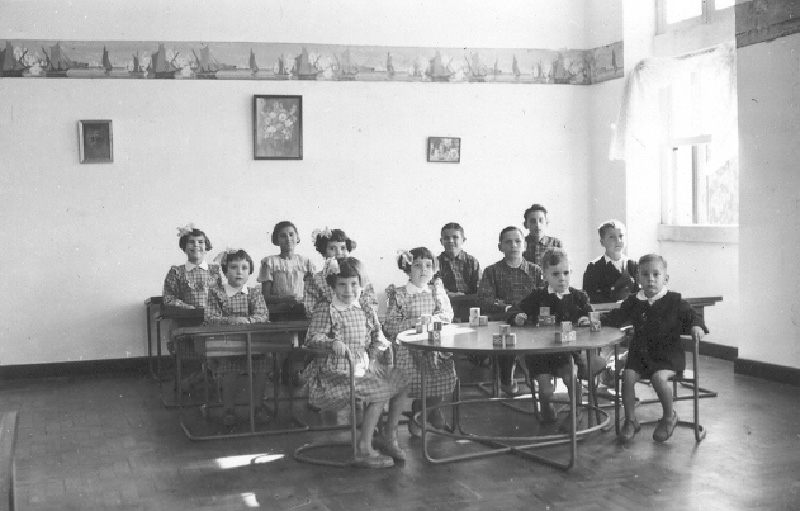
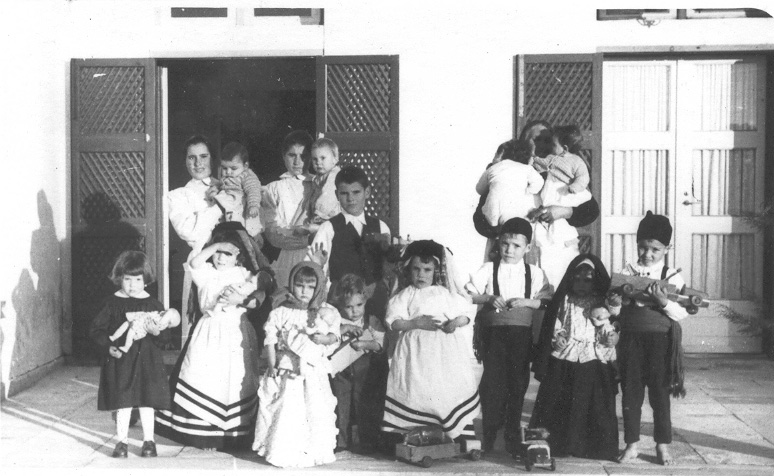
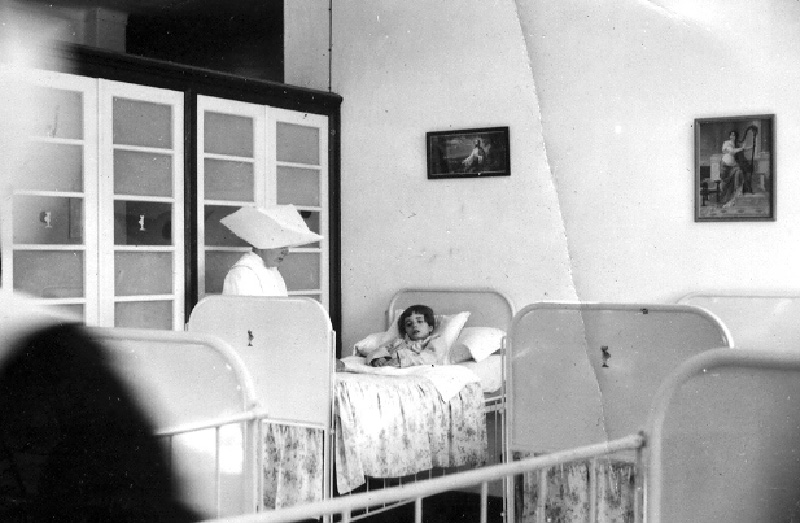
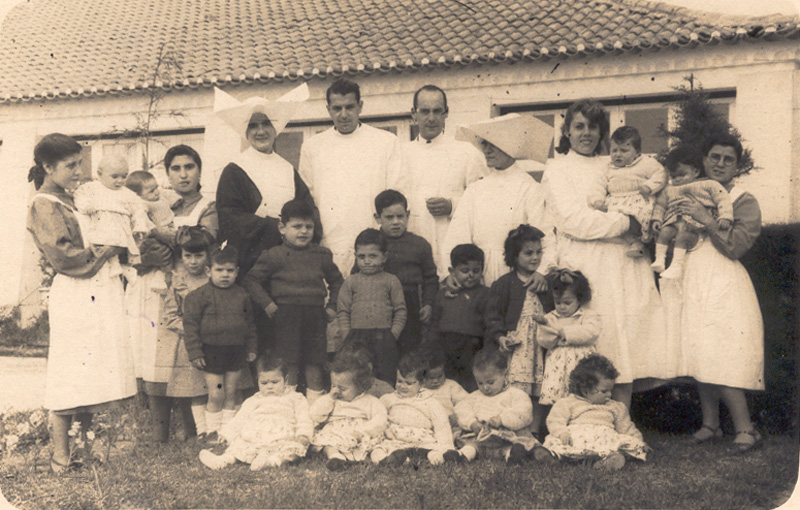
Children in the playground at Rovisco Pais
Women working in groups at Rovisco Pais
Working group of women sewing
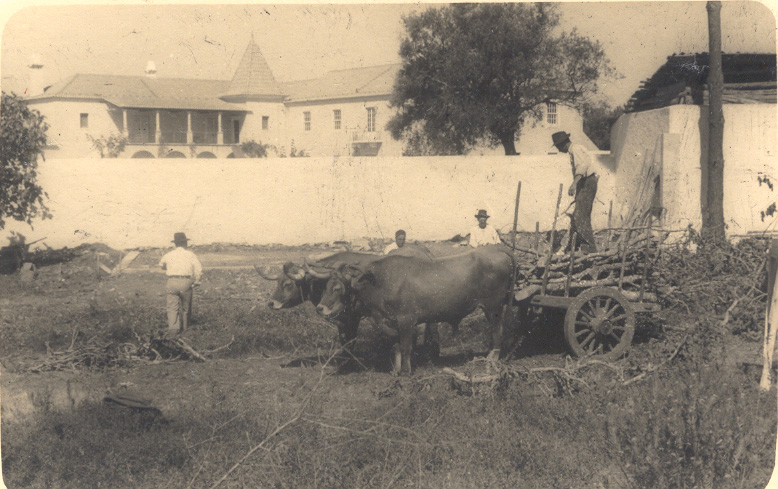
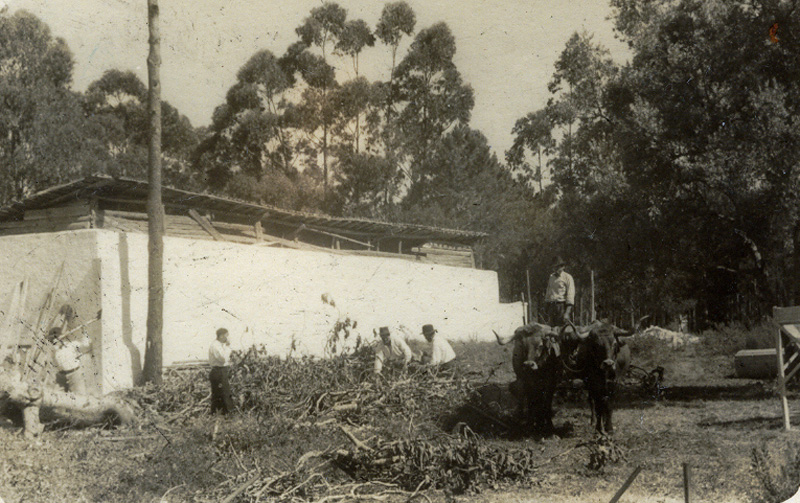
Men working in the fields with livestock, probably in the late 1940s or early 1950s
Men working in the fields, close to the administration building, which can be seen behind the wall. The sisters also lived here, on the top floor; their living space was called the ‘little convent’.
Working in the fields near the administration building
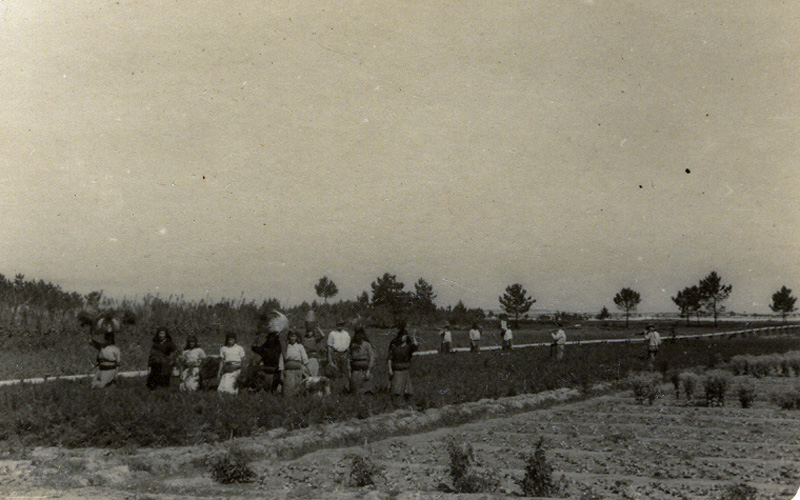
Women working in the fields, with men behind in a second line
Source
Alice Cruz, “The Hospital-Colónia Rovisco Pais: the Last Portuguese Leprosarium and the Contingent Universes of Experience and Memory”, História, Ciências, Saúde-Manguinhos 16.2 (2009): 407-431.
Related Reading Material


Category:Blog
Area:The Americas
Country:Canada
Tracadie and D’Arcy and Bentinck Islands (Canada)
The first …
Category:Blog
Area:The Americas
Country:Suriname
Groot Chatillon, Bethesda, and Saint Gerardus Majella (Surinam)
The lepros…
Category:Blog
Area:Western Pacific
Country:Philippines
Culion Leprosy Colony (Philippines)
At one tim…
Category:Blog
Area:South-East Asia
Country:India
Introduction to Web page of The Chronicle of Indian Leprosy
Leprosy ha…

Ikoli Harcourt Whyte’s songs to be published in dual notation with lyrics in English translation
Nigeria’s …